
A villa in Niseko, a plot of land in Hakuba, a condo in Okinawa. You've found the property you want, but you live overseas and can't view it before signing. In that situation, the key is to check what the listing and sales materials say against what is actually on the ground, and resolve any remaining questions before you sign. Beyond the exterior and the neighborhood, check separately whether what the seller, the real estate agent and the property management company tell you matches public records and how they actually operate.
This guide is for buyers who already have the address and listing materials for a property they are considering. If you want to narrow down what to look at before flying to Japan, or establish the facts independently of what the seller tells you, it explains how a pre-purchase check works and where its limits are. When you contact TSK INTERNATIONAL, we review your materials and what you need to know, then let you know what we can do in your case.
- Check the property's location, exterior, access and surroundings against the listing materials.
- The seller, the agent and the management company each need to be checked separately. A company simply existing doesn't tell you the deal is safe.
- Keep visual checks on site separate from professional judgments on building condition, title and contract terms.
- Make sure the date, location and method of each check are recorded, along with anything that couldn't be confirmed, so you can use it in your buying decision.
What a Pre-Purchase Site Check Can Tell You
A site check isn't about declaring a property "safe to buy." It's about turning things that are hard to judge from paperwork into concrete facts. Claims such as "quiet location," "easy to use in winter" or "fully managed" are broken down into where, when and against which documents each one can be checked.
| What to check | Examples | How to read the results |
|---|---|---|
| Location and exterior | Whether it's where you were told, the building name, its visible condition from outside, and how it sits relative to neighboring lots | The interior and structure can't be seen from outside and need to be checked separately. |
| Access and surroundings | The actual route, slopes, current road conditions, nearby buildings, and noise and traffic at the time of the visit | How a road looks tells you nothing about access rights or whether you can build. |
| Seller and related companies | Registered company name, address, public information, contact point and any verifiable signs of active business | Confirming a company exists is not the same as confirming its finances, ownership or authority to sell. |
| Property management | Where the manager is based, response hours, what cleaning and inspections cover, and fee documents | What you're told now, or how the property looks on the day, can't guarantee the service you'll get later. |
For an overview of hiring an investigator in Japan from abroad, see our Guide to Requesting Investigations in Japan from Overseas. This article focuses on one part of that: pre-contract checks on a resort property you already have in mind.
What to Look For in Niseko, Hakuba and Okinawa
Niseko: Winter Access and What Management Covers
A property may be marketed as "Niseko," but checks should be based on its actual address and the municipality it falls under. Work out the route to the property, the distance from the road to the front door, where you can park, and who clears the snow and how far. Summer photos alone won't tell you what winter use is really like.
Kutchan Town offers the "Kutchan Snow MAP," which shows snow depth, snowfall, snow-clearing operations and closures of town roads. We compare public information like this with the property's management contract and what can be seen on site. Town snow-clearing information doesn't mean the property itself or any private road leading to it will be cleared.
Hakuba: Terrain, Access and Public Hazard Maps
For a property in Hakuba, look beyond the building itself to the surrounding slopes, how close it is to rivers, and the roads you'll be using. Hakuba Village publishes hazard maps covering earthquakes, floods and landslides. The first step is to pin down the property's exact location and check the maps for that spot.
Land that looks flat, or a visit where nothing seemed wrong, is not evidence that there's no disaster risk. If you have questions about what the public maps show, check with the relevant local government office or a qualified professional.
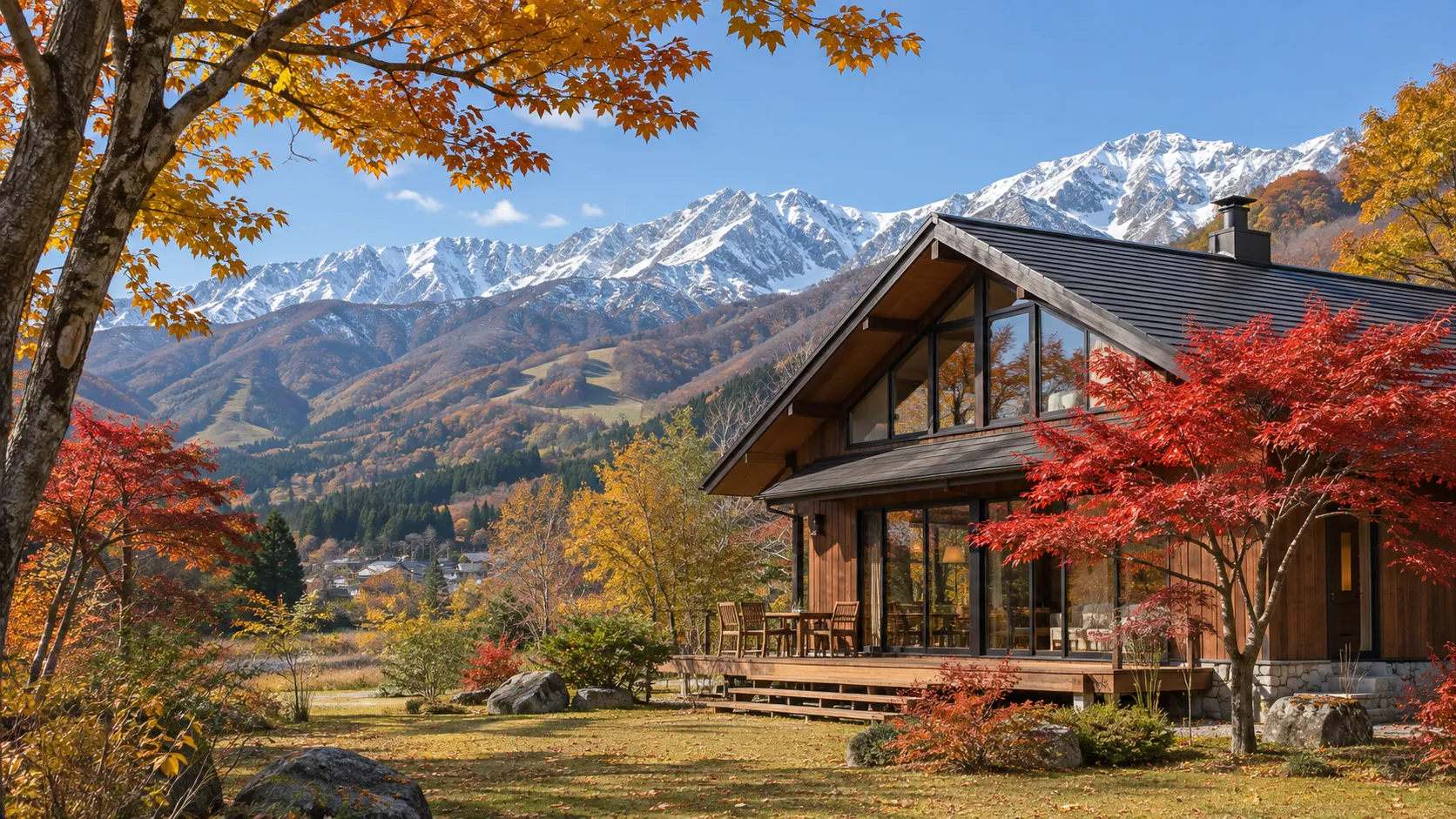
Okinawa: Proximity to the Sea and Care While You're Away
For a property in Okinawa, break an "ocean view" claim down into where the view is from, what buildings are around it, and how high it sits above the road. Rust on visible metalwork and the condition of exterior walls can be recorded, but the cause or extent of salt damage can't be diagnosed by eye alone.
Typhoon preparation and checks during long absences should be confirmed against what the management company tells you and what the contract says. For properties near the coast, also check the local municipality's tsunami and storm-surge hazard information. You can find municipal maps through Japan's national Hazard Map Portal Site.
Things look different in the snow season and in summer, on weekdays and weekends, and by day and by night. Decide in advance which seasons and times you want checked, and make sure the report clearly separates anything that couldn't be confirmed on this visit.
Checking Out the Seller, Agent and Management Company
The seller, the sales contact, the agent, the developer and the management company may all be different businesses. Start by listing who is selling, who is giving you information, and who will manage the property after you buy. Having the official Japanese company name, address and contact details, not just an English trading name or brand, makes cross-checking much easier.
- Name and address: Is the same party named consistently across the draft contract, company profile, invoices and other documents?
- Actual operations: Is there an office or service counter at the address you were given? If it differs from the registered address, has that been explained?
- Role: Is the company acting on the seller's behalf, as a broker, or only as the property manager?
- What management covers: Which of snow clearing, cleaning, inspections and emergency response are included in the contract, and which cost extra?
- Reviews and complaints: Can you tell where the information came from, when it dates from, whether it's really about the same company, and whether anything backs it up?
No bad reviews online doesn't mean there have been no problems. Likewise, having an office doesn't mean a company's claims, or the bank account you're asked to pay into, are legitimate. If the owner, the contracting party and the payee don't match, we flag it as something to be explained and reviewed with the appropriate professionals.
If you've been shown projected income from short-term rental or hotel operations, seeing people come and go on the day of a visit doesn't prove occupancy or revenue. We set out the period, the property and the supporting documents behind the figures you were given, and keep this separate from professional accounting or business valuation.
What to Prepare Before Contacting Us
You don't need to have everything. Just sort what you have into "received," "requested but not yet received" and "only told verbally."
- The property: Listing URL, sales materials, address and lot number, map location, building name and unit number.
- The other parties: Official names and addresses of the seller, sales contact and management company, plus any information from the person you're dealing with.
- What you've been told: Anything you already have, such as photos, floor plans, management fee and service details, a draft contract, and documents relating to the Important Matters Disclosure (jūyō jikō setsumei).
- What you need to decide: What you want to be able to decide afterward, such as shortlisting before you travel or clearing up questions before signing.
- Deadlines and contact details: Your planned signing and payment dates, country of residence, preferred language, and the hours and time zone in which you can be reached.
For key claims such as "a few minutes' walk" or "management included," note who told you and when. Listings can change, so saving copies that show the date you viewed them makes later comparison easier.
Site Checks vs. Professional Inspections
A site check compares what can be observed from outside with the materials you provide and publicly available information. Getting inside the building or onto the grounds requires permission from someone authorized to give it, along with agreed terms of access. Being hired by you does not give us the right to enter private property without permission.
- Building condition: Recording the exterior is not the same as a professional inspection of the structure, leaks, systems and so on.
- Land and roads: Observing current conditions is not the same as determining boundaries, rights of way or whether you can build.
- Public records: Comparing property registry entries with what you've been told is not a substitute for legal advice on title or contracts.
- Deal terms: Whether the price is fair, contractual liability, and tax and filing obligations should be confirmed with the relevant professionals and authorities.
Brokerage, price negotiation and contract procedures are outside the scope of the checks described here. We set out what needs confirming and which questions to ask, so you can take them to a real estate agent, lawyer, judicial scrivener (shihō shoshi), architect or other professional. A site check does not guarantee that the transaction or the building is safe.
What Affects the Cost and Timeline
Fees aren't a flat percentage of the purchase price. They're quoted individually based on what needs to be checked. Checking the exterior and surroundings of one property is very different from cross-checking several properties and companies across multiple regions.
- How many properties and companies are involved, where they are, and whether travel or overnight stays are needed.
- How much material you can provide and how accurate it is, and how much additional information needs to be obtained and checked.
- The date, time and season of the visit, and whether access or interviews need to be arranged.
- How much is to be photographed or recorded, the report format, and your language preferences.
When you get a quote, check what work and expenses are included, how additional visits are approved, what happens in bad weather or if access is refused, and how anything that couldn't be confirmed will be reported. Even with a signing deadline approaching, some things can't be solved by scheduling. You can't check winter conditions in a season without snow, for example. Let us know your deadline and which checks matter most to you.
For general information on fees and how the process works, see Investigation Fees and How to Apply. Costs and conditions for your specific case are confirmed in the quote.
From First Contact to Online Report
- 1Share your materials and goalsWe go over the property, the companies involved, your questions and your planned signing date.
- 2Define what to checkWe separate what can be done by reviewing documents, what needs a site visit and what needs a professional, and let you know what we can cover.
- 3Quote and engagementWe confirm the locations to visit, working conditions, how findings will be recorded, the fee and the scope of the report. Clients overseas can complete the engagement online.
- 4InvestigationWe carry out the checks within the agreed terms and the law, recording the date, time and source of each finding.
- 5ReportWe set out what was confirmed, where it differs from what you were told, what remains unconfirmed, and any follow-up questions worth asking.
We use an online reporting system. You can view your report from overseas and download it as a PDF. Before you engage us, we confirm what can be photographed or recorded and what the report will include.
When you're deciding whether to buy, a report that simply says "no issues found" is far less useful than one that shows which areas were checked, when, how, and what couldn't be determined. For example, if we photographed the exterior but couldn't access the interior, the report makes that clear so you know what to check next.
Frequently Asked Questions
Can I work with you from overseas without traveling to Japan?
Yes. Send us the property materials, what you'd like checked and your planned signing date, along with your country of residence, preferred language and the times you can be reached. We'll confirm the scope of the work and how we'll stay in touch.
Do I still need this if the seller or agent offers to show me around?
There's no need to double-check things that have already been clearly explained or documented. Consider whether anything remains that a guided viewing won't answer, or that you'd like to verify independently, and decide from there whether extra checks are worthwhile.
Can you check inside the unit or on the grounds?
That requires arranging permission from the relevant parties, how we'll get in and what we'll look at. We can't check areas where permission isn't given. And even if we can see inside, that is not the same as a professional building inspection.
Can a site visit tell me a short-term rental's occupancy rate or investment return?
No, not from a single visit. You need to review the period the operating figures cover and the documents behind them, and treat this separately from professional business, accounting and legal advice.
I haven't found a property yet. Can you help me search for land or a villa?
Tell us the area you're interested in, how you plan to use the property, your requirements and any leads you already have. Searching for properties is a different process from pre-contract checks on a property you've already chosen. We'll let you know whether and how far we can help.
Can you also handle the purchase or negotiate the price for me?
What this article covers is fact-finding and putting those facts in order. Brokerage, price negotiation and contract procedures are not included. For those services, please contact the appropriate businesses or professionals directly.
TSK INTERNATIONAL | ENQUIRIES
Discuss your case
Tell us your relationship to the person, the country involved and what you need to establish.
Recommended reading
 For Clients Requesting Investigations in Japan from Overseas | TSK INTERNATIONAL, Nationwide Coverage Across Japan
 Looking for Rare Collectibles Only Found in Japan? We Track Down Records, Vintage Toys and Watches On the Ground
 Hawaii Infidelity Investigation Guide | Preparing for Evidence Collection, Investigation Methods and Costs
References
- Kutchan Town: Snow Information (くっちゃんの雪, Japanese)
- Hakuba Village: Disaster Prevention and Hazard Maps (Japanese)
- Ministry of Land, Infrastructure, Transport and Tourism / Geospatial Information Authority of Japan: Hazard Map Portal Site
References last checked: November 17, 2026. For any specific property, check the latest materials for its location and guidance from the relevant authorities.