
A Japanese pressing with its obi intact, Showa-era sofubi or Chogokin, or a vintage watch you've been hunting for years. If you can't find it through proxy buying services or auction sites and want to know whether it might still be sitting in a shop or with a private owner in Japan, this page is for you. TSK INTERNATIONAL can help you pin down exactly what you're looking for and check whether it's in stock, or where it is, on the ground in Japan.
This service is about finding an item and confirming where it is and what condition it's in. We don't buy, ship or authenticate items. This article explains what information we need before starting, what we check in person, and how to think about cost and timing.
- Two items with the same name can be very different finds depending on catalog number, release date, specs and accessories.
- We don't rely on online listings alone. We combine inquiries to specialist shops with checks in person.
- We report separately what photos can show and what needs expert authentication.
- We agree on the search scope, a budget cap and when to stop if the item isn't found, all before we start.
What Is a Rare Item Search in Japan?
"I still think about something I saw in a shop in Japan years ago." "I have a photo, but I don't know what it's called in Japanese." "Is the item in that online listing actually still there?" Starting from clues like these, we work out what to look for, where, and how far to take the search.
The search covers the things that are hard to do from overseas: making inquiries in Japanese, finding where shops actually are, and photographing the item itself with permission. For an overview of investigations in Japan and how overseas clients can request them, see our Guide to Requesting Investigations in Japan from Overseas.
How This Differs from a Proxy Buying Service
This isn't about ordering and shipping an item from a seller you've already found. It's about tracking down the item you want and checking whether it matches your requirements. Any negotiation or purchase is between you and the seller. Finding an item doesn't mean the owner will agree to sell it.
What We Check for Each Type of Item
Japanese Pressings
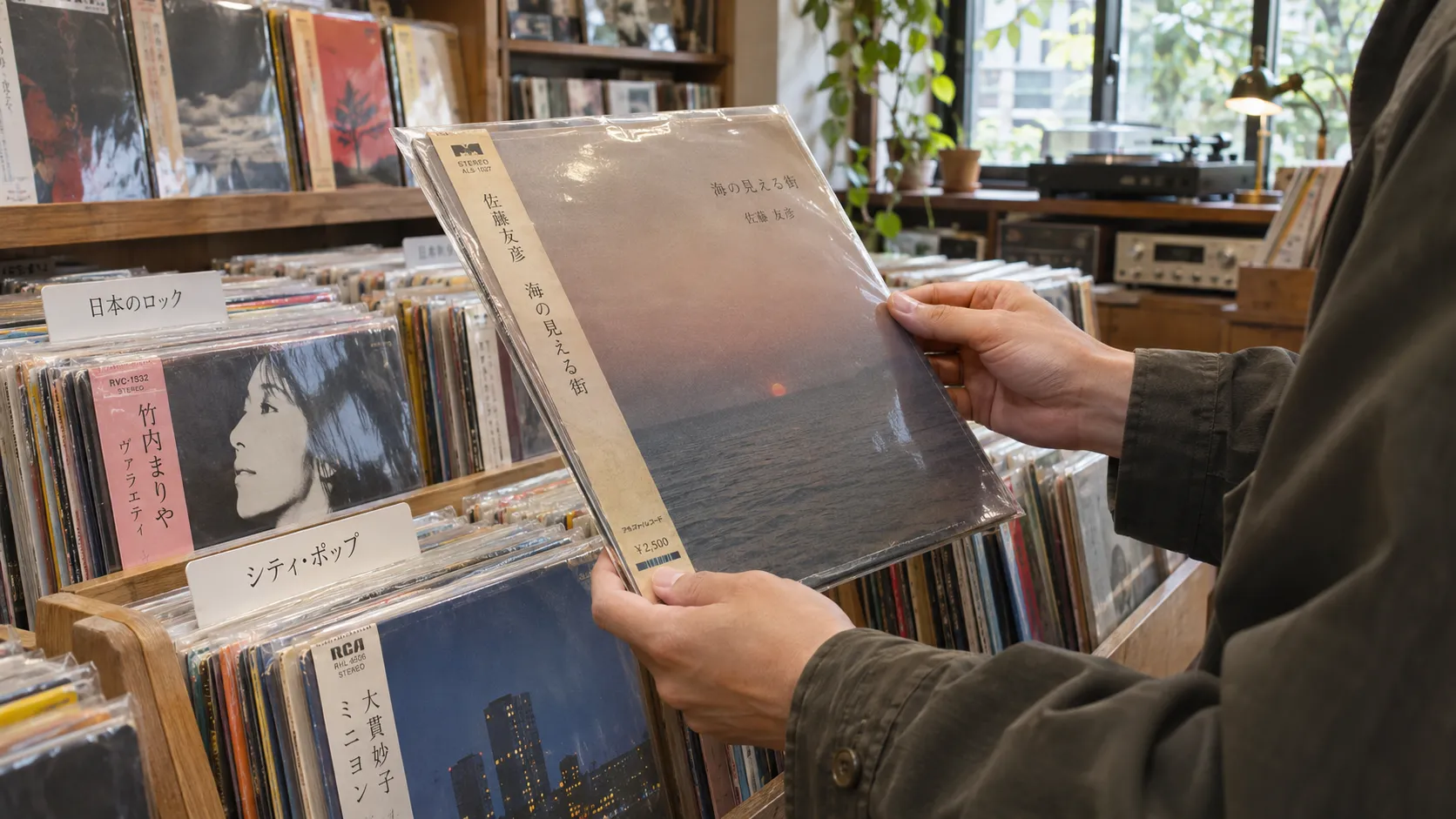
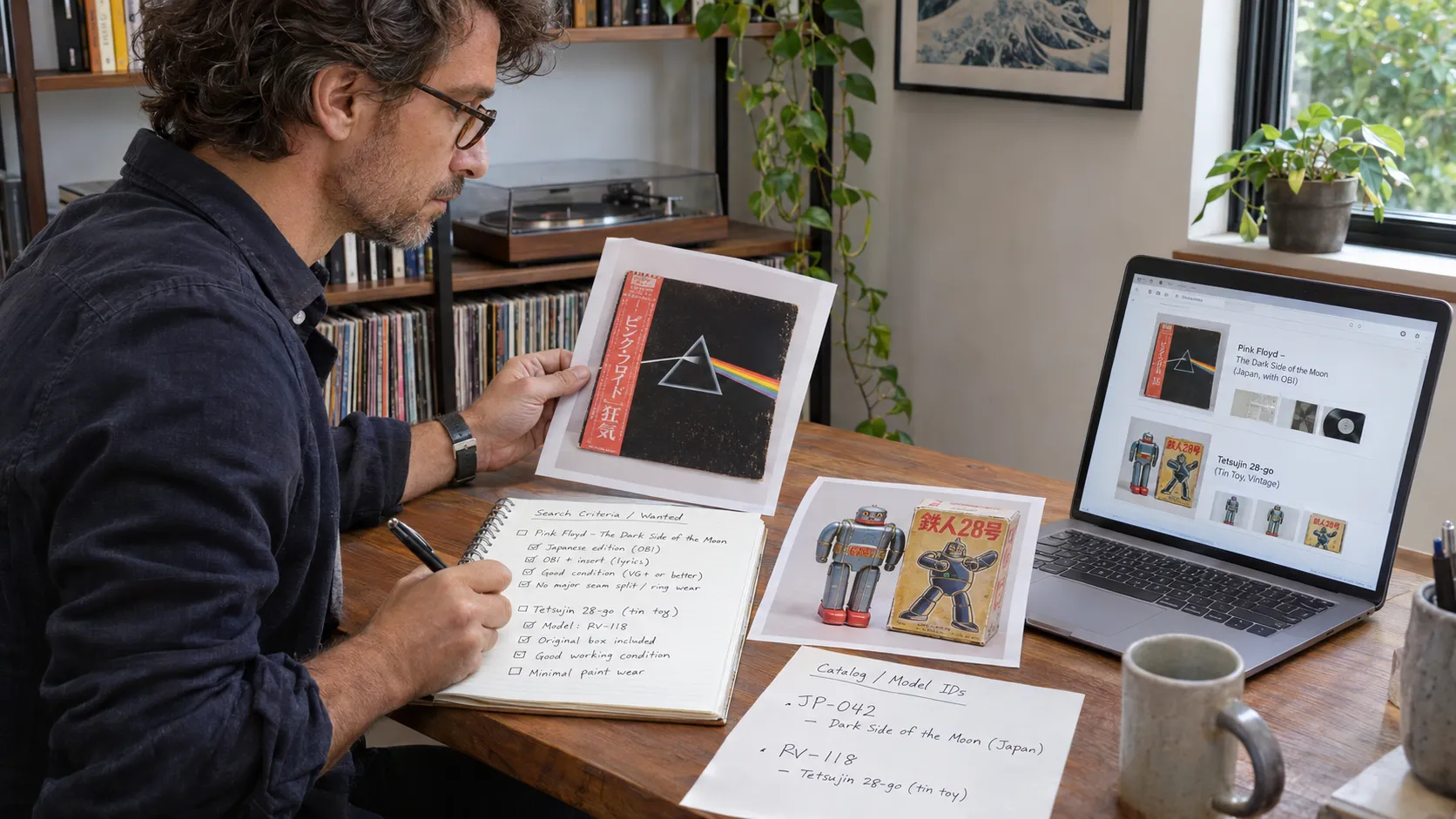
Beyond the artist and title, we note the label, catalog number, the release period you're after, and whether the obi and lyric insert are included. For requirements such as "first press" or "with obi," please send the photos or references you're going by. It also helps to decide in advance whether other pressings of the same release are acceptable.
Sofubi, Chogokin and Other Vintage Toys
We check the maker, series, character, size, colorway, any stamps or markings, and whether the box and instructions are included. Please separate your must-haves from your nice-to-haves: are reissues or color variants acceptable, and does it need to be new in box? If you don't know the item's name, we start by identifying it from photos showing the whole piece and its distinguishing features.
Vintage Watches
We note the brand, model, reference number, preferred era, dial and case details, and whether box and papers come with it. We record the watch's appearance and the seller's description where we can, but we don't judge the movement's condition, whether parts are original, or authenticity from photos alone. Any authentication or servicing check is assumed to be handled by a specialist.
What to Prepare Before Contacting Us
- The item: Name, catalog or model number, maker, era, reference photos and any original listing page.
- Your requirements: Edition, color, size, condition and accessories such as the box, obi or instructions.
- Leads so far: Shops or events you've visited, when you saw any listings, and shops you've already contacted along with their replies.
- Priorities: What's essential, and what you'd consider if it's slightly different.
- Search budget and timeline: The most you're willing to spend on the search, which areas to focus on first, and how long you'd like us to keep looking.
- Contact details: Your country or region, the best times to reach you, and your preferred language.
Please tell us how much you can spend on the search itself, separately from what you're prepared to pay for the item. This determines how widely we search and how closely we check.
How the Search and In-Person Checks Work
Narrowing Down Shops and Leads
We compare the item's features with past listings and identify the specialist shops, antique dealers and traders likely to handle it. Where appropriate, we also look at publicly listed contacts such as collector clubs. We don't decide anything based on whether an item shows up online. We judge whether an inquiry or a visit is needed.
"In Stock" vs. Seen in Person
A shop telling us "we have it" is not the same as us seeing the item. Where we're allowed to visit or take photos, we check the points agreed with you, such as the catalog number, appearance and accessories. We also note when the check was made, since stock can change at any time.
Respecting Private Owners
Even when a lead points to a private owner, we decide case by case whether reaching out or checking the item is appropriate. We ask whether they still own it or would consider selling only as far as they're willing to answer. We can't always obtain or share their contact details or where the item is kept. If an owner declines, we don't keep contacting them.
Our findings keep three things separate: what shops or owners told us, what we actually saw, and what we couldn't confirm. Not finding an item doesn't prove it doesn't exist anywhere in Japan.
What Photos Can Show vs. Authentication
When we see an item in person, and where photos are allowed, we record the whole piece, catalog numbers or markings, scratches and stains, and accessories. If some areas couldn't be photographed, or the item couldn't be taken out of its case, we note that too.
Photos alone can't confirm authenticity, restoration history, internal condition or market value, and we don't guarantee any of these. If a seller calls an item "unused," "first press" or "serviced," we keep that claim separate from what we've confirmed ourselves. If your purchase decision needs an expert opinion, consult an authentication service or specialist dealer before you buy.
What Affects Cost and Timing
Costs depend on how much information there is to identify the item, how many regions and shops are involved, how far inquiries, visits and photos need to go, and travel expenses. Checking one shop you already have a lead on is very different from searching for candidates across several regions.
- Which area or shop to search first, and where to look next if nothing turns up.
- Whether the work is inquiries only, or also includes visits and photos.
- Which expenses are included in the fee, and when extra costs apply.
- How fees work if the item isn't found, or sells before we can visit.
- When you'll be asked to decide on next steps, the budget cap, and when the search ends.
Sometimes we have to wait for shops or owners to reply. Rather than fixing a timeline up front, we work in stages, starting with the leads you already have. For how the process works overall, see Fees and How to Request an Investigation. The cost of your search is quoted individually once we know the details.
How It Works from Overseas
- 1Tell us about the itemWe ask for photos, catalog or model numbers, past listings, your budget and your deadline.
- 2Review your leads and whether we can helpWe pin down what we're looking for and consider likely sources and search methods.
- 3Quote and online agreementWe confirm the areas, tasks, costs, stopping point and what the report will cover. The agreement can be completed online from overseas.
- 4Inquiries and in-person checksWithin the agreed scope, we check where the item is and what condition it's in. If the search needs to widen, we agree on the extra terms with you first.
- 5ReportWe set out when each check was made, our sources, photos, what the other party told us and anything we couldn't confirm.
We use an online reporting system that you can access from anywhere in the world, and reports can be downloaded as PDFs to save or print. We confirm in advance your preferred language and how much help we can offer if materials need translating.
If you need anything else checked besides finding an item, see our Investigation Services page. We'll help you work out what else you want confirmed alongside this search and explain what we can cover.
Rare Item Search FAQ
Can I ask you even if I don't know what the item is called in Japanese?
Yes. Send us reference photos, the maker, what the item is called outside Japan, any listing pages and so on. We'll tell you whether we think it can be identified and what else needs to be confirmed.
Can you find items that aren't listed online?
We can look into contacting or visiting specialist shops. Whether we can take the job depends on your leads and the scope of the search, and we can't guarantee we'll find the item.
Can you buy the item and ship it to me?
No, we don't offer buying or shipping. Negotiation, purchase, payment and shipping arrangements are handled directly between you and the seller.
Can you tell me if it's genuine?
We can check things like appearance, catalog numbers and accessories, but we don't authenticate items or guarantee their value. Please keep anything that needs an expert opinion separate from what you want us to check in person.
What if the owner doesn't want to sell?
Finding the item and the owner's willingness to sell are two separate things. If the owner doesn't want to sell, we respect that. We won't pressure them to sell or keep contacting them.
Do I still pay if the item isn't found?
Whether the item is found and how fees apply are separate questions. Please confirm this when you receive the quote and sign the agreement, along with the work involved, expenses and when the search ends.
TSK INTERNATIONAL | ENQUIRIES
Discuss your case
Tell us your relationship to the person, the country involved and what you need to establish.
Recommended reading
 Buying a Villa or Land in Niseko, Hakuba or Okinawa from Overseas? What to Check On Site and How to Vet the Seller and Property Manager
 For Clients Requesting Investigations in Japan from Overseas | TSK INTERNATIONAL, Nationwide Coverage Across Japan
 Hawaii Infidelity Investigation Guide | Preparing for Evidence Collection, Investigation Methods and Costs